Relationships are shaped not only by what happens between two people, but also by
what each person brings into the relationship. Stress from work, financial pressures, unresolved experiences, lack of rest, or the demands of everyday
life can influence how we communicate, respond, and connect with others.
A difficult day can sometimes follow us home.
A stressful conversation at work may make us more impatient with a partner. Ongoing
pressure can make it harder to listen, communicate calmly, or respond
thoughtfully. Over time, these patterns can contribute to stress and relationship problems.
This raises an important question:
How does stress affect relationships? And
can developing a greater sense of inner balance help us respond
differently?
One practice that has been studied in
relation to stress and personal well-being is Transcendental Meditation (TM), a simple, natural, effortless
technique practised for 20 minutes twice a day. By providing a period of deep rest, TM is intended to support the mind
and body in settling down naturally.
How Does Stress Affect Relationships?
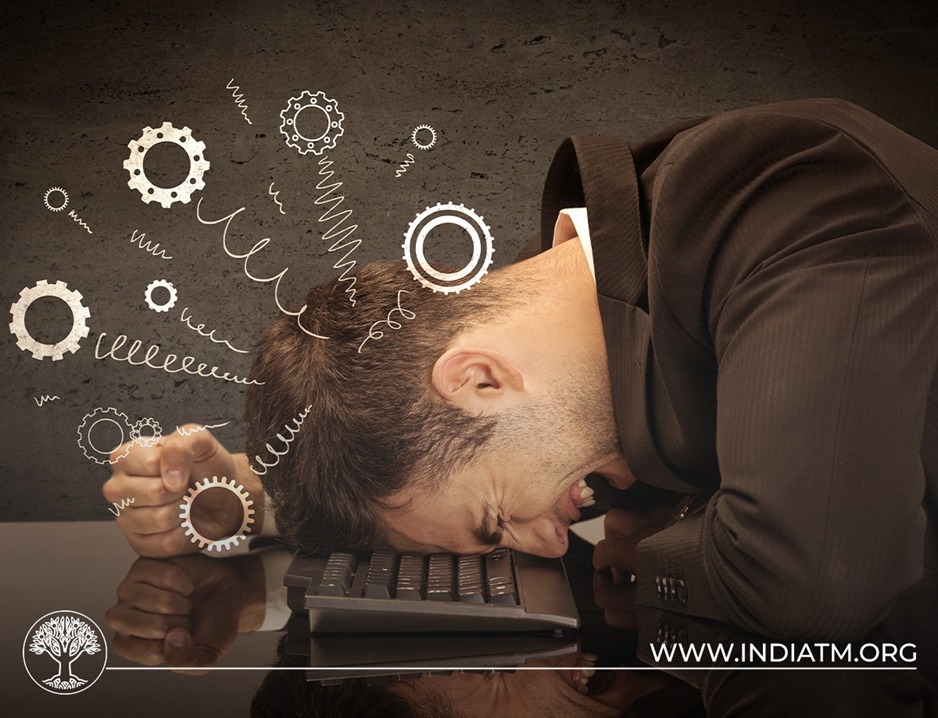
Stress does not always stay confined to
the situation that caused it. When we are under pressure, we may become more reactive,
impatient, withdrawn, or emotionally overwhelmed. This can affect the way we
interact with the people closest to us.
For example, someone dealing with a
demanding day may react sharply to a small comment from their partner. Another person
may withdraw rather than communicate because they feel mentally exhausted. When
such responses happen repeatedly, they can create misunderstandings and
distance.
In this way, stress affects relationships
not necessarily because people care less about one another, but because stress
can influence how they respond in challenging moments.
Reducing the accumulated burden of stress
may therefore have implications beyond individual well-being—it may also
influence how we relate to others.
Stress and Relationship Problems: The Importance of How We
Respond

We cannot always control what happens during
the day. Deadlines, disagreements, unexpected responsibilities, and other
challenges are part of life.
What we can gradually develop is our ability
to respond.
When the mind is constantly occupied or
under pressure, even minor situations can feel overwhelming. With greater mental
stability and rest, there may be more space between an experience and our
response.
This does not mean that meditation
eliminates disagreements or guarantees perfect relationships. Rather, practices
that support reduced stress and greater self-awareness may help create a better
foundation for communication and connection.
Can Transcendental Meditation Support Better Relationships?
Research
has explored whether
the effects associated with TM may extend into interpersonal
and professional life.
A study of executives and workers found
that after three months
of regular practice
of the TM technique,
participants showed improved work and personal relationships compared with
control groups from the same work sites. The findings were published in Anxiety, Stress & Coping: An
International Journal, 6, 245–262 (1993).
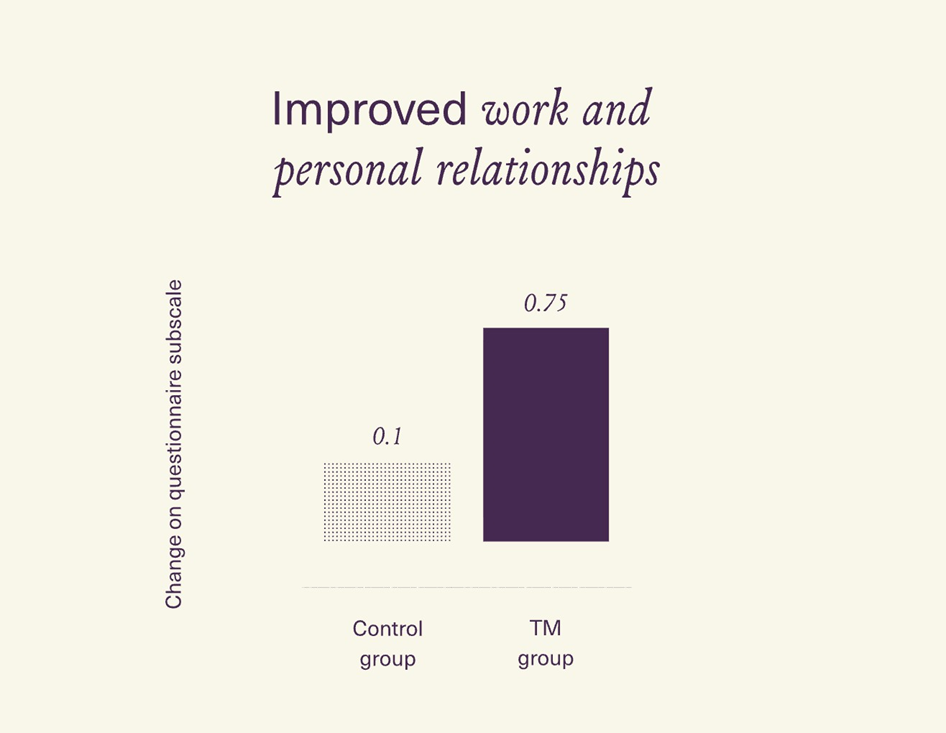
The study is particularly relevant
because relationships were considered alongside the participants' broader
experience of work and daily
life. It suggests
that the benefits
associated with TM may not be limited to an individual's internal
experience, but may also be reflected in how they relate to others.
This is an important distinction. Transcendental Meditation for stress is
not about learning a technique for controlling
another person's behaviour or avoiding difficult conversations.
Instead,
the practice provides
an opportunity for the individual to settle down and experience deeper rest, which may support
greater balance in daily life.
From Reaction to Response
One of the most meaningful changes in a relationship
can be the ability to pause before reacting.
Instead of immediately responding to
frustration, we may become better able to listen. Instead of carrying the pressure
of the day into an evening conversation, we may find it easier to be present.
Instead of allowing one difficult interaction to determine the rest of the day,
we may be able to regain balance more easily.
These changes can be subtle, but over time
they can influence the quality of our interactions.
Transcendental Meditation does not replace
honest communication, mutual understanding, or the willingness to work through
relationship challenges. Rather, it can be one part of a broader approach to
personal well-being that supports how we meet those challenges.
How Can Transcendental Meditation Improve Relationships?
Transcendental Meditation may support relationships
indirectly by helping the individual develop greater balance and awareness.
When stress is reduced and the mind is more
settled, everyday interactions may feel less overwhelming. This can create more
room for qualities that relationships depend on—listening, patience, empathy,
clarity, and thoughtful communication.
For couples, this can be particularly
relevant. How does stress affect romantic relationships? When either partner is
consistently under pressure, communication can become more difficult and small disagreements
can escalate. Supporting individual well-being may therefore contribute to a
healthier relational environment.
The goal is not to meditate instead of addressing
relationship issues. It is to develop a more settled foundation from which
those issues can be addressed.
A Different Way of Looking
at Stress
Stress is often treated as something that
exists only in the circumstances around us. But our experience of those
circumstances also depends on the condition of the mind and body.
Creating regular periods of deep rest may
help us handle daily demands differently. For those looking for a natural
approach to managing stress, Transcendental Meditation for stress offers one
avenue that has been researched in different settings.
And perhaps one of the most valuable effects
can be seen not only in how we feel when we are alone, but in how we show up
when we are with the people who matter to us.
Because better relationships do not always
begin with changing the other person. Sometimes, they begin with changing the
way we respond.
FAQs
What Is Transcendental Meditation?
Transcendental Meditation is a simple, natural,
effortless meditation technique practised for 20 minutes twice a day. It allows
the mind to settle inward and experience quieter levels of awareness while the
body gains a state of deep rest.
How Does Transcendental Meditation Support Emotional Balance?
Transcendental Meditation may support
emotional balance by providing regular periods of rest and allowing the mind to
settle. With consistent practice, this may help individuals respond to everyday situations with greater composure
rather than reacting
automatically to stress.
How Can Transcendental Meditation Improve Relationships?
Transcendental Meditation does not
directly solve relationship problems. However, by supporting individual well-being
and reducing stress, it may contribute to qualities that are important in
relationships, such as patience, listening, awareness, and more balanced responses.
How Does Stress Affect Romantic Relationships?
Stress can influence communication, patience,
emotional availability, and conflict responses. When either partner is under
persistent pressure, even minor disagreements may become harder to navigate.
Finding healthy ways to manage stress can therefore be an important part of
maintaining relationship well-being.